A Degree Makes You Qualified. Not Wise.

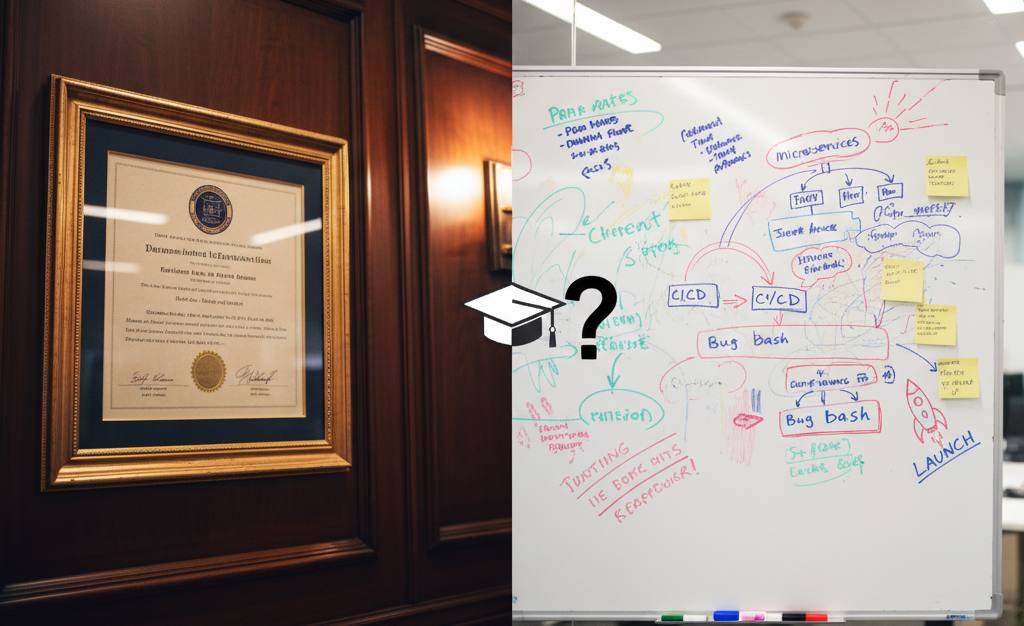
I’ve hired people with multiple degrees in hand and with years of experience - who couldn’t hold a two-minute conversation without turning it into a TED Talk about themselves.
I’ve also worked with people who never finished college… and somehow had a PhD in reading the room, owning mistakes, and making teams better.
That’s when it hit me:
A degree can prove that you studied.
It cannot prove that you’re safe to collaborate with.
And in modern engineering, “safe to collaborate with” is not a nice-to-have. It’s the difference between shipping value and shipping chaos.
The Wall Has Degrees. The Hallway Has Reality.
Most companies hire for what looks good on paper:
- Education
- Certifications
- Big-brand names
- Buzzword bingo (“microservices”, “Kubernetes”, “event-driven”, “synergy”)
But the actual job happens in the hallway moments:
- When your PR gets rejected, and you don’t take it personally
- When production breaks, and you don’t play “blame Olympics.”
- When QA reports a bug, and you don’t say, “Works on my machine,” like it’s a spiritual belief
- When a junior engineer asks a “basic” question, and you don’t make them regret having curiosity
A degree may open the door.
Wisdom decides what kind of person walks through it.
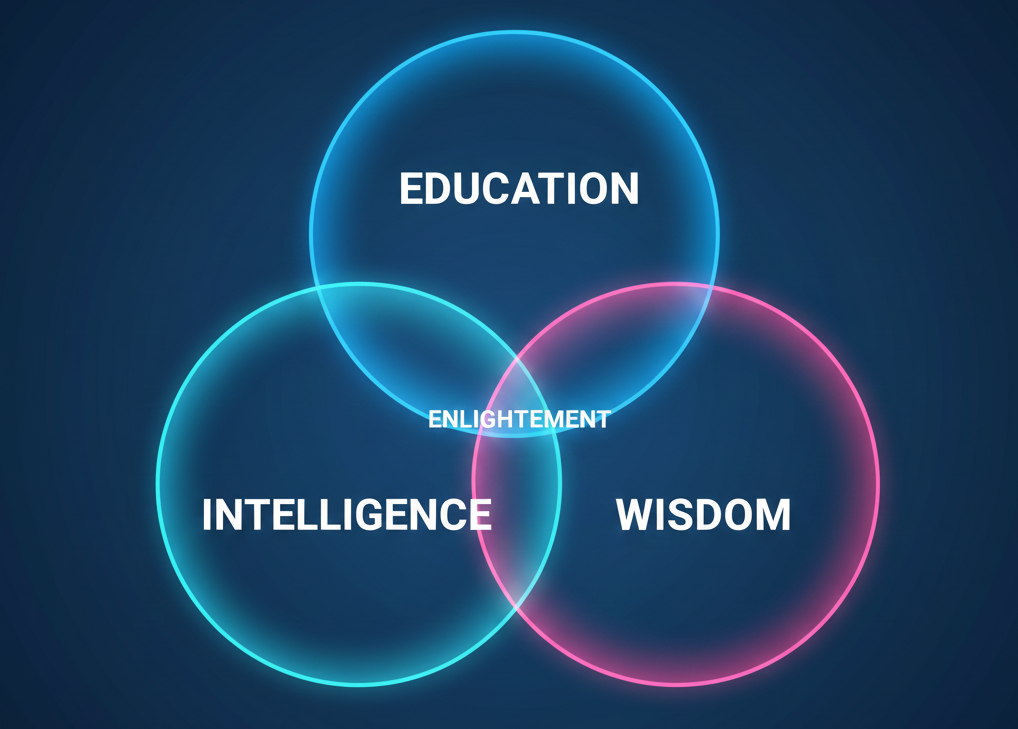
Education Teaches What to Think. Intelligence Teaches How to Think. Wisdom Teaches When to Shut Up.
Here’s the simplest way I explain it to new managers:
Education
Gives you knowledge.
You learn concepts, systems, patterns, and theories.
✅ Useful
❌ Not sufficient
Intelligence
Gives you reasoning.
You can solve problems, see tradeoffs, and learn quickly.
✅ Powerful
❌ Can still be weaponized
Wisdom
Gives you judgment.
You understand people, timing, consequences, and humility.
✅ Rare
✅ Team-multiplying
✅ The real seniority
I’ve seen highly educated people destroy team morale in one sprint because they were more committed to being right than being helpful.
And I’ve seen “non-traditional” engineers become the backbone of delivery because they understood something schools rarely teach:
How to treat people under stress.
The Most Dangerous Person in the Room is the “Educated Ego”
There’s a specific profile every tech manager eventually meets:
- Smart
- Qualified
- Confident
- And emotionally allergic to feedback
They don’t ask questions — they deliver verdicts.
They don’t listen — they reload.
They don’t collaborate — they conquer.
They’re not always loud. Sometimes they’re quietly toxic:
- “Just do what I said.”
- “This is basic.”
- “Not my fault.”
- “Why didn’t QA catch it?”
- “I don’t do meetings.” (Translation: I don’t do alignment.)
They treat communication like it’s overhead.
But communication is the product.
Because teams don’t fail from lack of talent.
They fail from lack of trust.
And nothing kills trust faster than arrogance with a resume.
A Quick Story From My Personal Life
We once had two engineers join around the same time.
Engineer A had a very strong academic background, spoke brilliantly, and could debate architecture like a lawyer.
Engineer B came from a non-traditional path. Not fancy on paper. Quiet. Observant.
Within weeks:
- Engineer A was “winning” arguments… and losing people.
- Engineer B was asking the simplest questions… and preventing the dumbest failures.
Engineer B would say things like:
- “What happens when this API returns null?”
- “Do we know who gets paged if this breaks?”
- “Should we write this down so the next person doesn’t suffer?”
Engineer A would say things like:
- “This is obvious.”
- “We don’t need documentation.”
- “This approach is inferior.”
Guess who became the go-to person during incidents?
Not the one with the better vocabulary.
The one with better judgment.
Degrees Don’t Teach These (But Your Career Depends on Them)
If you want to know whether someone is wise, don’t ask for their GPA.
Look for these signals:
1) They can disagree without disrespect
They attack problems, not people.
2) They can take feedback without defending their identity
They don’t treat critique like a personal insult.
3) They can listen to understand, not to respond
This one is rare. Extremely rare.
4) They own outcomes
Not tasks. Outcomes.
5) They behave well when stressed
Pressure reveals personality.
6) They treat “less experienced” people with dignity
That’s the true test of character.
Degree Opens Doors. Intelligence Builds Skills. Wisdom Builds a Life.
Here’s the line I wish someone told me earlier:
Education can get you hired.
Wisdom gets you promoted.
Character gets you followed.
Because leadership is not a title. It’s a pattern:
- When things go wrong, do people feel safer or smaller around you?
- When you enter a room, does clarity increase or tension increase?
- Do people leave conversations with you energized… or emotionally tired?
You can’t “certify” this.
But everyone can feel it.
How to Build Wisdom (Even If You’re Already “Qualified”)
Wisdom isn’t mystical. It’s trained.
Here are the practical reps:
1) Do Postmortems Without Blame
Not “Who caused it?”
But: “What allowed it?”
2) Practice Curiosity in Conversations
Before responding, ask:
- “Help me understand…”
- “What’s the constraint here?”
- “What are we optimizing for?”
3) Learn to Pause
The best engineers I know have a superpower:
They can sit in silence for two seconds before speaking.
That pause prevents 20 minutes of ego.
4) Collect Feedback Like Data
If multiple people tell you the same thing, it’s not “haters.”
It’s a pattern.
5) Read People Like You Read Logs
Listen for what’s not being said:
- fear
- confusion
- hesitation
- unasked questions
Teams don’t break from bad code.
They break from ignored emotions.
Final Truth: Don’t Confuse Schooling With Wisdom
A degree is a receipt. It shows you paid time and effort to learn.
But wisdom is something else:
Wisdom is how you talk.
How you listen.
How you treat people when nobody’s watching.
How you behave when you’re wrong.
How you handle power when you finally get it.
So yes—degrees make you qualified.
But wisdom?
Wisdom makes you valuable.
And in the long run, the world doesn’t reward credentials.
It rewards people who can build—
without breaking others in the process.
#EngineeringLeadership #SoftSkills #Communication #EmotionalIntelligence #WorkplaceCulture #Wisdom #PersonalGrowth #TeamDynamics #TheGenZTechManager