Two Life Rules That Quietly Run Every Great Engineering Team

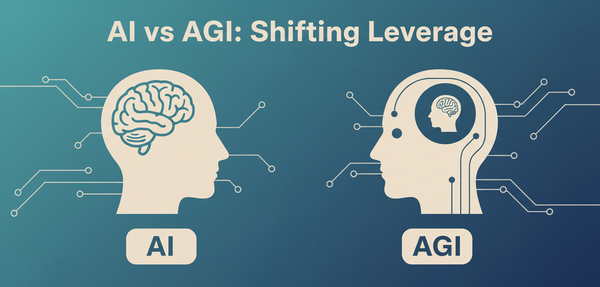
(and why AI didn’t replace them—it exposed them)
I’ve noticed something uncomfortable about modern engineering culture:
We love new tools.
We love new frameworks.
We love new dashboards that tell us we’re productive.
But the things that actually separate great engineers—and great teams—are… annoyingly old-school.
They sound like life advice your friend sends at 2 AM with a “bro, trust me.”
And yet, they’re the same rules I’ve seen decide whether a system scales… and whether a person does.
Here are my two life rules. Not inspirational posters. Not “hustle” content.
Two rules that show up in production incidents, design reviews, performance cycles, relationships, and leadership—whether you believe in them or not.
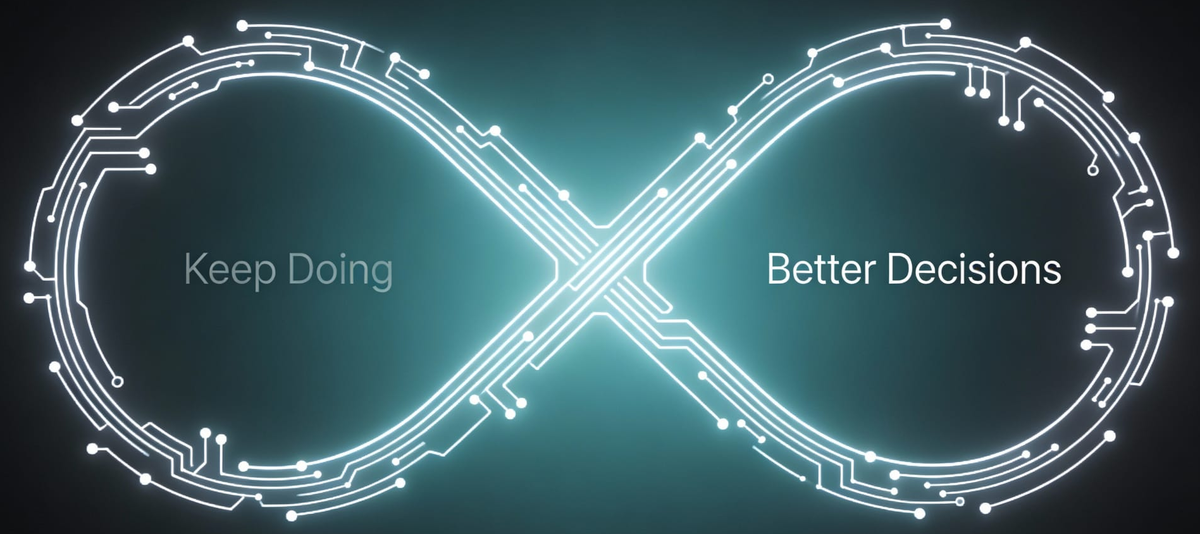
Rule 1: “Keep doing.” Energy doesn’t disappear. It compounds.
“Keep doing” is often dismissed as motivational noise.
But in engineering, repetition is literally how mastery forms.
- You don’t become good at incident response by reading an SRE book once.
- You don’t become good at architecture by saying “microservices” confidently in meetings.
- You don’t become good at debugging by being lucky.
You become good by doing the thing again—
and carrying forward what you learned, even when you don’t feel the reward immediately.
In engineering terms: iteration stores energy
Every PR you write stores energy.
Every review you do stores energy.
Every failed deployment stores energy.
Every “why did this break?” postmortem stores energy.
Not as pain. As data. As intuition. As muscle memory.
It’s like a weird savings account where the currency is failure and the interest rate is wisdom.
And the most unfair part?
You rarely see the return on schedule.
Sometimes it comes months later as a sudden insight:
“Oh… that’s why we should validate nulls at the boundary.”
Sometimes it shows up as calm under pressure when others panic:
“You’ve seen this pattern before. You don’t escalate emotionally. You escalate correctly.”
Sometimes it shows up as confidence that doesn’t need volume:
You don’t argue to win. You explain to align.
The equation balances itself. Eventually.
Old way vs AI era: output got cheap, learning didn’t
Old way:
- Progress looked like “more code written.”
- Repetition was slow, expensive, and human-powered.
New normal (AI era):
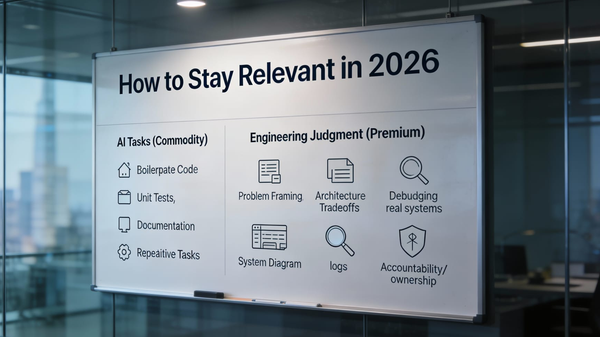
- Output is cheap. You can generate 20 approaches before your coffee cools.
- But mastery is still paid in reps, not prompts.
AI can accelerate attempts.
It can’t outsource ownership.
You can ask Copilot/Claude to draft code, refactor functions, or even write tests. Great. We do it too.
But here’s what AI can’t do for you:
- It can’t develop your judgment.
- It can’t develop your taste.
- It can’t develop your resilience.
- It can’t develop your reliability under pressure.
Those come from “keep doing.”
“Keep doing” also shapes humans, not just engineers
Engineering culture—when practiced with awareness—builds character.
The same habits that build good systems build good people:
- Clarity: Say what you mean. Define terms. Remove ambiguity.
- Responsibility: Own outcomes, not just tasks.
- Respect for constraints: Time, people, legacy code, limits.
- Long-term thinking: Avoid short-term wins that create long-term debt.
A better engineer is often a better human—because reality trains you.
If energy truly cannot be destroyed, then the way forward is simple (not easy):
Put in energy that aligns with who you want to become.
Build things with care.
Treat people as part of the system—not obstacles inside it.
Keep doing.
The energy stays.
And over time, it comes back refined.
Rule 2: The problems you face are usually linked to your decisions.
This one is less poetic. Also more dangerous.
Most of the stress people experience—at work, in life, in relationships—feels like it comes from outside:
- “My manager doesn’t get it.”
- “The client changed requirements.”
- “Production is on fire again.”
- “This relationship is complicated.”
- “Life is unfair.”
And yes—sometimes it is.
But if you zoom out far enough, you usually find a chain of choices:
- The shortcut you took was because “we’ll fix it later.”
- The conversation you avoided because “it’ll be awkward.”
- The merge you rushed because “we need velocity.”
- The boundary you didn’t set because “I don’t want conflict.”
Every decision has a price.
You’re either paying it now or paying it with interest later.
In engineering terms: you’re living in your architecture choices
Teams don’t “randomly” drown in incidents.
They usually drown in past decisions:
- No automated tests → slow releases and fear-based work.
- Weak PR reviews → bugs become “surprises” in prod.
- No observability → outages become mysteries.
- No clear ownership → every incident becomes a blame lottery.
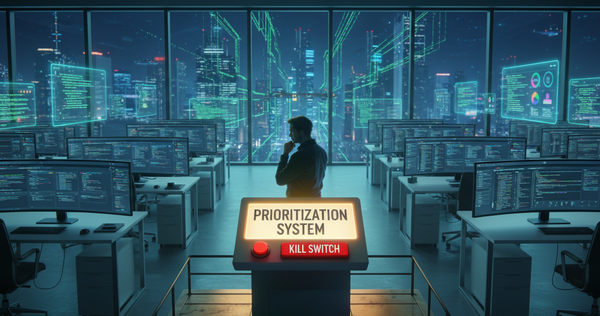
- No explicit prioritization → everything is urgent, so nothing is important.
Most engineering pain is just debt collecting.
Not just technical debt—decision debt.
Old way vs AI era: reactions scale faster than ever
Old way: decisions were slower. Teams had time to think between steps.
New normal: AI speeds everything up—
which means bad decision-making now scales faster too.
AI can generate code instantly…
and also generate chaos instantly.
The bottleneck is no longer “can we build it?”
The bottleneck is “should we build it?” and “did we think this through?”
That’s why the second rule matters more now than before:
As long as you make choices out of reaction, life will keep punishing you.
And your team will keep firefighting the same class of problems, wearing new Jira tickets.
The solution is simple: pause → observe → act
Not “pause for a week.”
Not “let’s create a committee.”
Just a small interruption in the emotional autopilot.
Before you respond in Team Channel.
Before you approve a risky PR.
Before you promise a deadline you can’t meet.
Before you say “yes” because you’re afraid of disappointing someone.
Pause.
Observe what’s actually happening:
- What’s the real problem?
- What’s the risk?
- What’s the cost of delay vs the cost of wrong?
- What’s the downstream impact?
- Who owns the outcome?
Then Act—not from emotion, but from clarity.
That’s where engineering becomes leadership.
And that’s where life starts getting better too.
The uncomfortable conclusion: AI didn’t change the rules. It revealed them.
AI made execution cheaper.
So the real differentiators became brutally human:
- Can you stay consistent when dopamine isn’t immediate?
- Can you make decisions from clarity instead of reaction?
- Can you build systems and relationships that don’t collapse under stress?
- Can you treat people like part of the architecture?
Because here’s the truth, nobody writes on the sprint board:
Your culture is just your repeated decisions.
And your future is just your repeated energy.
So yes—use Copilot. Use agents. Automate the boring parts.
Ship faster.
But don’t miss the fundamentals.
Keep doing.
Improve decisions.
Pause, observe, act.
The law of conservation of energy says that energy is neither created nor destroyed.
And this energy stays.
And it comes back refined.
#EngineeringLeadership #SoftwareEngineering #AIinEngineering #DeveloperProductivity #CareerGrowth #DecisionMaking #TechCulture #Management #Learning #Resilience #LifeRules #TheGenZTechManager